
Subtotal $0.00 Subtotal: $0.00
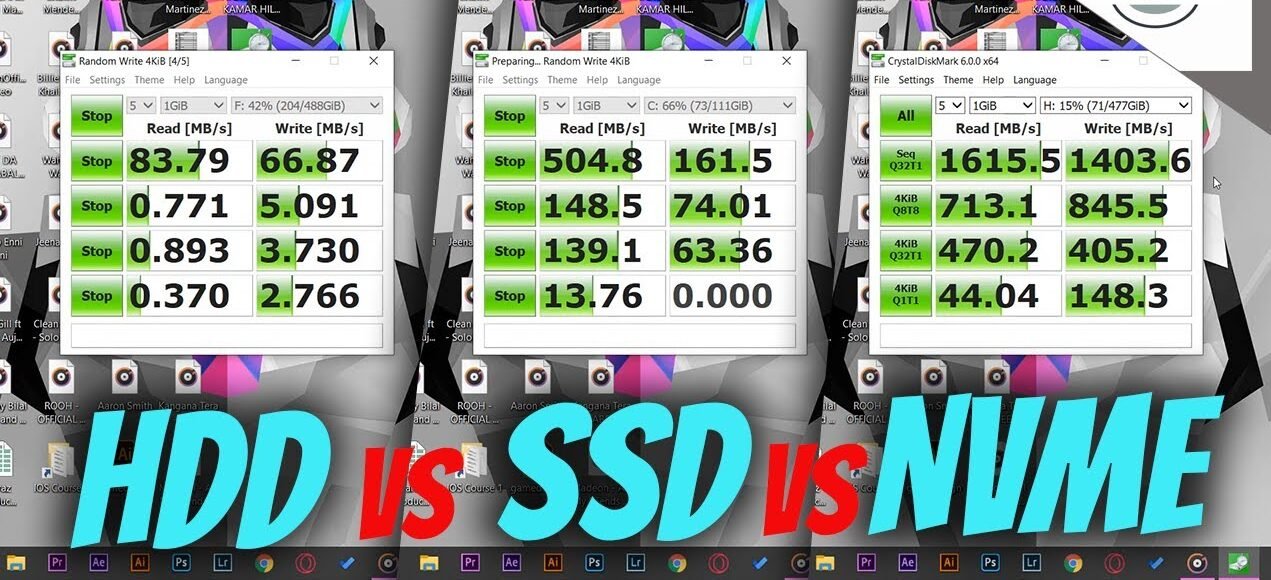
Hard disk drives (HDD), solid state drives (SSD), and non-volatile memory express (NVMe) are different types of storage devices that have different performance characteristics and comparison the storages disk. HDDs use spinning magnetic disks to store data, while SSDs and NVMe use flash memory chips. HDDs are the slowest, but cheapest and most spacious, while NVMe are the fastest, but most expensive and least spacious. SSDs are somewhere in between, offering a balance of speed, cost, and capacity.
To compare the performance speed of these storage devices, we can look at some benchmarks that measure how fast they can read and write data. One common metric is megabytes per second (MB/s), which indicates how many megabytes of data can be transferred in one second. Here are some approximate average speeds for each type of storage device:
- HDD: 100 MB/s
- SSD: 500 MB/s
- NVMe: 3500 MB/s
As you can see, NVMe is much faster than both HDD and SSD, as it uses multiple PCI-e lanes that allow it to transfer data at very high rates. SSDs are also faster than HDDs, as they do not have any moving parts and can access data more quickly. HDDs are the slowest, as they have to spin the disks and move the read/write heads to access data.
However, these speeds may vary depending on the specific model, condition, and fragmentation of the storage device. Also, these speeds may not reflect the actual performance in real-world scenarios, as there may be other factors that affect the speed, such as the operating system, the file system, the CPU, the RAM, and the software applications.
Therefore, when choosing a storage device for your needs, you should consider not only the performance speed, but also other aspects such as the capacity, the reliability, the durability, the compatibility, and the price.